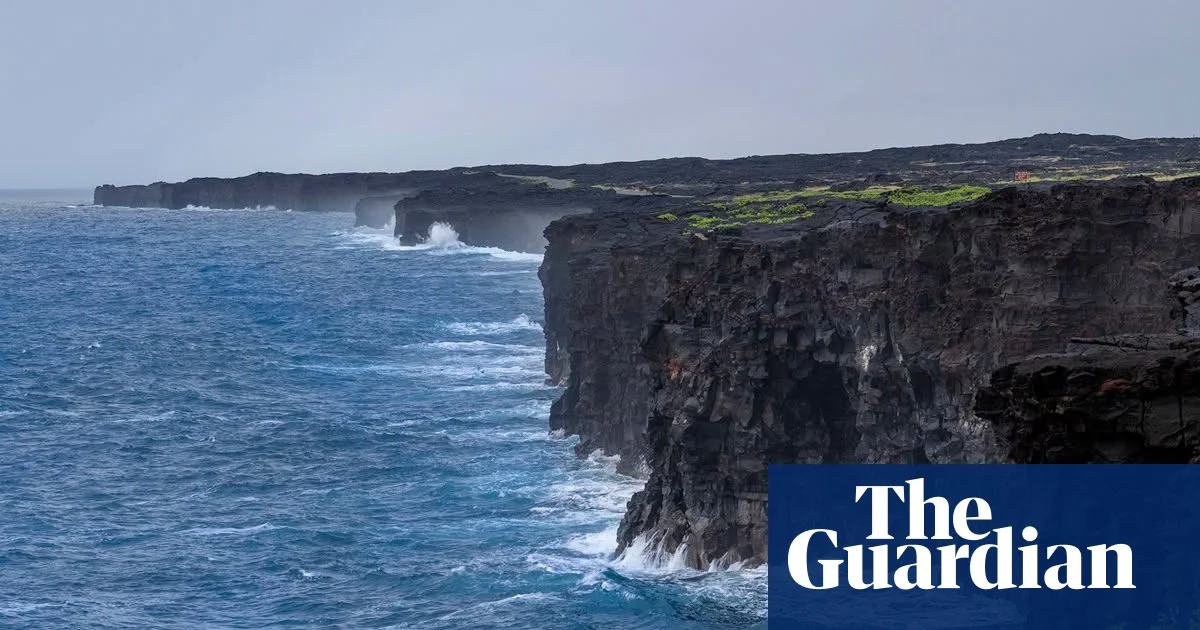
The Guardian reports that the arch is no longer standing and places the collapse on the southern coast of the Big Island, inside Hawaiʻi Volcanoes National Park. However, the available information does not indicate the precise time when the structure disappeared.
According to the description reported by the British newspaper, Hōlei reached a height of approximately 90 feet, or just over 27 meters. The formation had existed for about 550 years.
The same source explains that the arch formed naturally through differential erosion caused by ocean waves. The process shaped the coastal rock over the course of approximately five and a half centuries, according to The Guardian.
The collapse was reported after a period of severe storms in the region in recent weeks. The Guardian establishes this sequence of events, but the available information does not demonstrate that the storms were the direct cause of the collapse.
The confirmation cited in the report came from the National Park Service, while the material provided to reconstruct the event is based on The Guardian’s report. Therefore, the news of the arch’s disappearance remains based on an attributed confirmation, with no additional independent sources indicated in the available information.
Based on the information provided, it is therefore not possible to establish either the exact date or the time of the collapse. The report links the event to weeks marked by unsettled weather conditions, but distinguishes the chronological sequence from the establishment of a causal relationship.
The disappearance of Hōlei marks, according to the cited report, the loss of a coastal formation approximately 90 feet high that developed through the erosive action of the ocean over a period of about 550 years. The Guardian reports that the arch is no longer standing, while no further details are available about the precise time of the collapse.