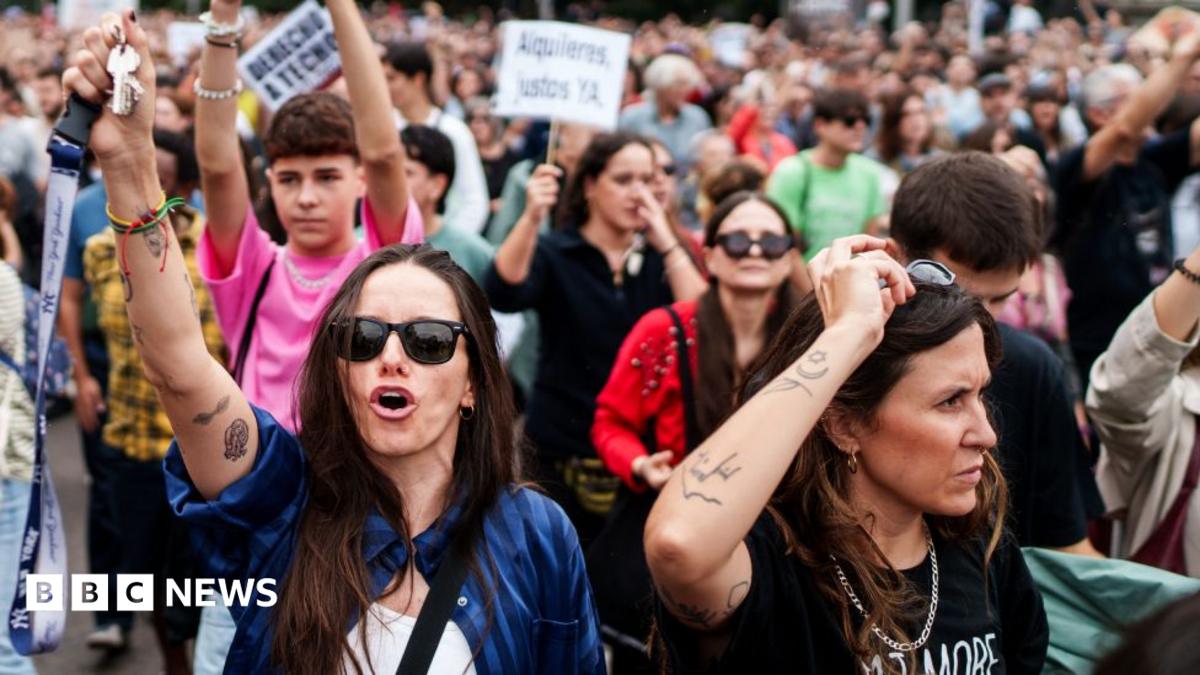
Rallies took place across several parts of the country, with Madrid at the center of the mobilization. The demonstrations came amid growing public pressure over housing policies and the situation facing renters.
Participants called for affordable housing and stronger protections for people living in rented accommodation. The protests followed Parliament’s rejection of government initiatives described by different sources as emergency measures, rent protections, support measures or housing decrees.
The scale of participation is difficult to quantify. Reports refer to tens of thousands of people, around 70,000 demonstrators nationwide and, in Madrid, estimates close to or equal to 500,000 released by organizers; no official estimate was provided by the government or police.
Events linked to the protests included the forced eviction in Madrid of 87-year-old Maricarmen Abascal. The eviction was identified as connected to the demonstrations and as a symbol of the housing crisis, although sources differ in defining its direct role in the rallies’ origins.
Calls for a general strike also appeared during the demonstrations. The available information reports demands and slogans to that effect, but does not establish that a strike was formally called or took place.
Prime Minister Pedro Sánchez and his government were associated with the rejected measures and were criticized in the context of the protests. The available evidence, however, does not specify the scale or political origin of those criticisms.
The mobilization thus highlights the pressure on Spain’s political leadership following Parliament’s rejection of the government’s proposed response. Housing affordability and tenant protections remain at the center of the issue, while the actual number of participants and the legal scope of the rejected measures remain inconsistently defined by the sources.